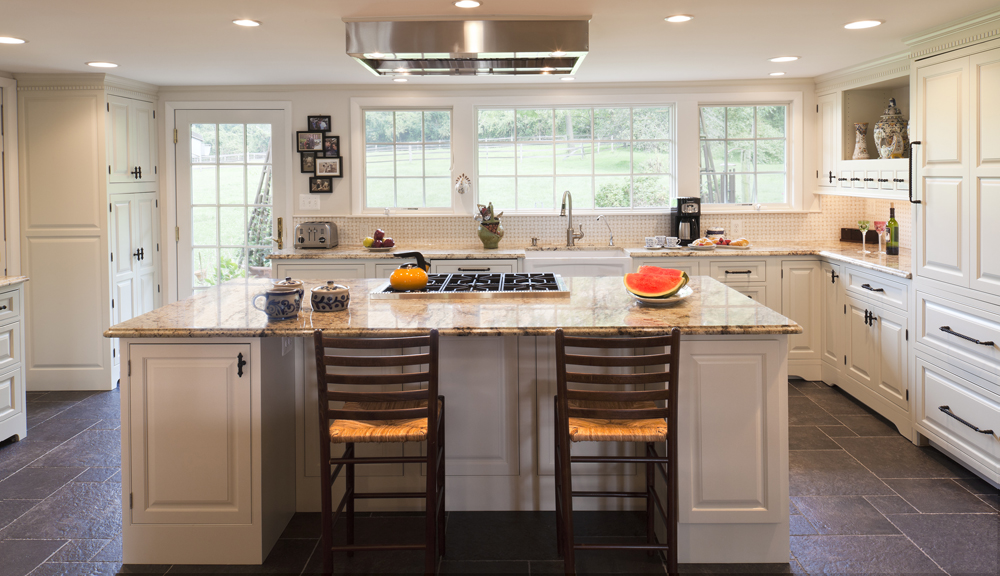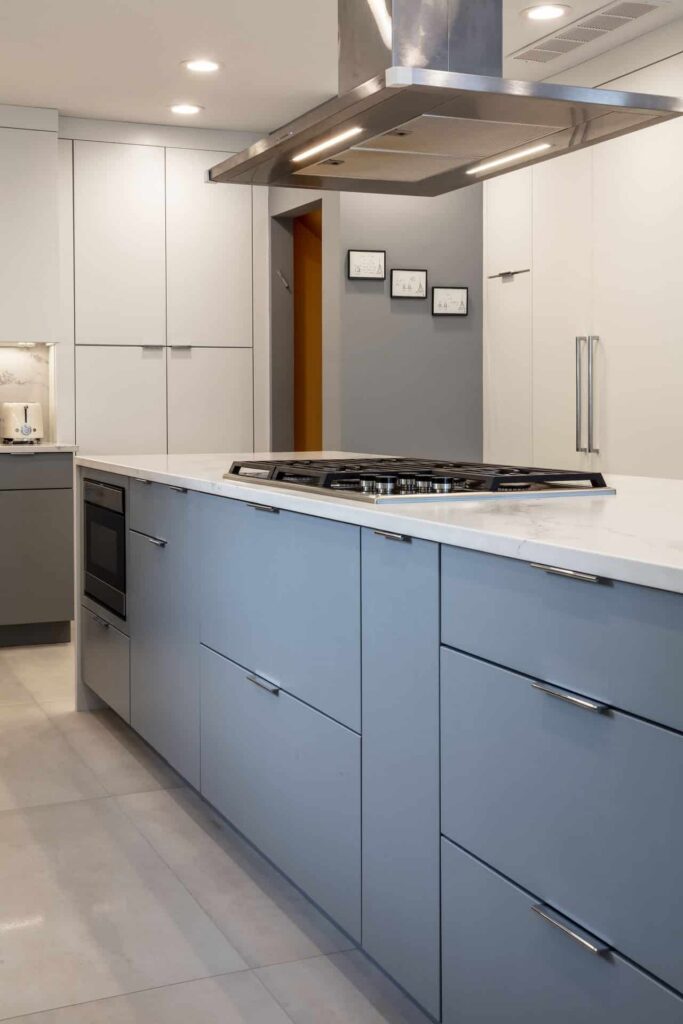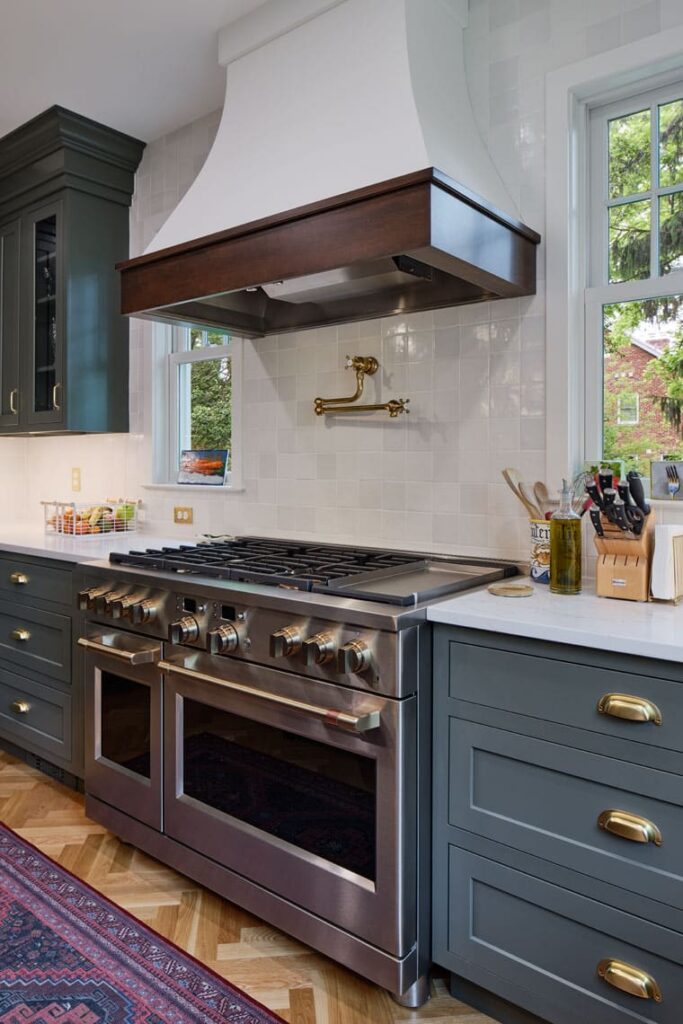
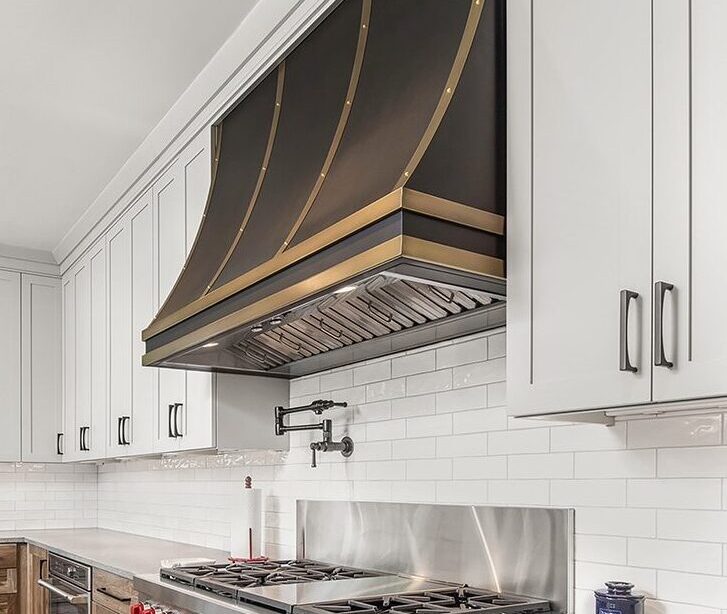
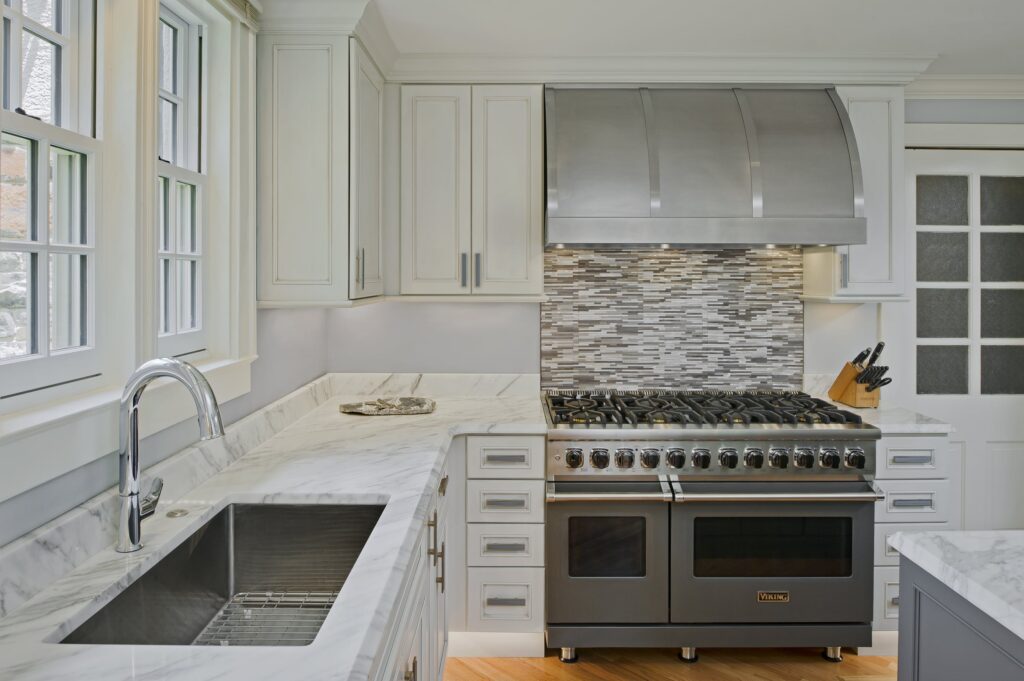
All kitchens with stoves require an exhaust hood, but they don’t have to be an afterthought. Your kitchen exhaust hood can reflect your personal style and be the focal point of your kitchen. Our Interior Design Team can help you choose the best exhaust hood option for your kitchen remodel.
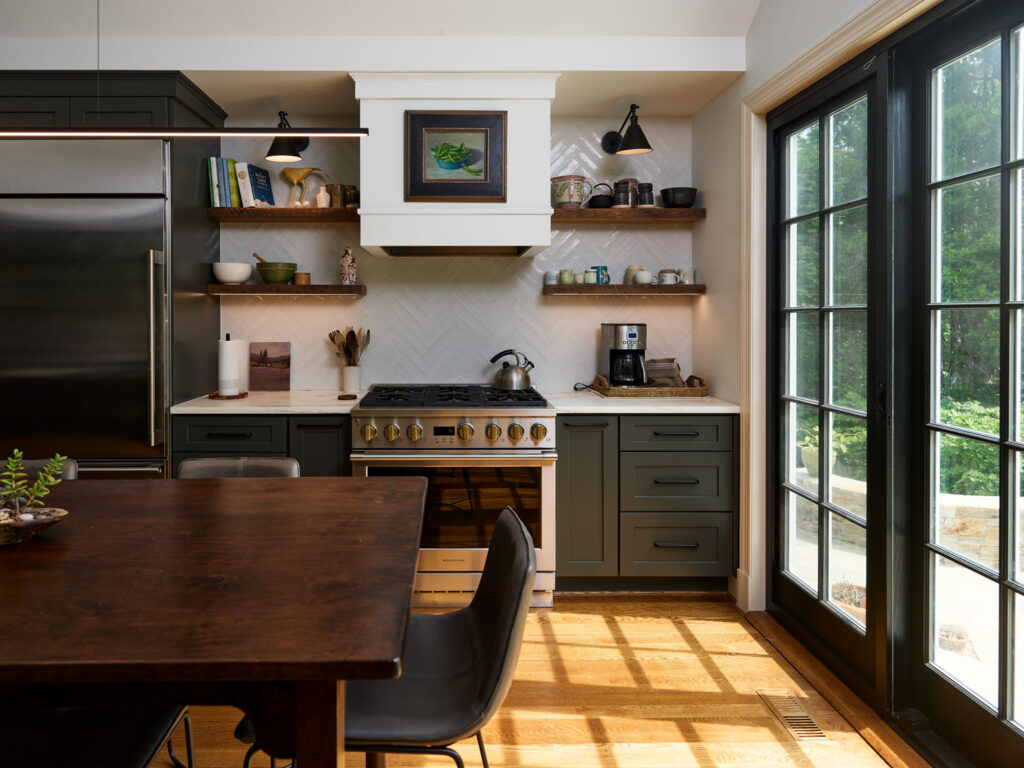
Proper ventilation is essential in any space where fumes, smoke, grease, or combustion byproducts can accumulate to unhealthy levels. Exhaust systems are commonly required in enclosed environments where air quality and occupant safety are critical. Residential kitchens are no exception, making range hoods an important component of a healthy home.
In Maryland, most jurisdictions require kitchen exhaust hoods to comply with state and local building code regulations. Maryland’s Building Performance Standards adopt the International Residential Code (IRC), which requires mechanical exhaust systems, including kitchen range hoods, to discharge air directly outdoors rather than into attics, crawl spaces, soffits, or other concealed spaces. Ductwork must be smooth, airtight, and constructed from approved materials such as galvanized steel, stainless steel, or copper. In addition, ducted systems must include a backdraft damper to prevent outside air from entering the home. Listed and labeled ductless range hoods are permitted as an exception and do not require outdoor venting.
For homeowners planning a new kitchen or remodeling project, installing a compliant ventilation system is typically mandatory unless a code-approved ductless unit is selected. Local jurisdictions may have additional requirements or enforcement standards, so it is always advisable to consult your county or city building department before beginning construction.
Beyond meeting code requirements, range hoods provide significant health and comfort benefits. They remove cooking odors, excess moisture, airborne grease, and pollutants generated during cooking, including carbon monoxide, nitrogen dioxide, and other potentially harmful particles. Without adequate ventilation, these contaminants can contribute to poor indoor air quality and negatively impact the health of household occupants.
As homes become more energy-efficient and tightly sealed, and as high-BTU professional-style cooking appliances become increasingly popular, effective kitchen ventilation is more important than ever. The International Residential Code and the U.S. Environmental Protection Agency both recommend the use of properly installed vent hoods to capture, filter, and exhaust cooking emissions outdoors. Fortunately, homeowners can choose from a wide variety of range hood styles and designs that combine functionality with aesthetics, ensuring both improved air quality and an attractive kitchen environment.